
Huntington Beach Previous Residents Sources
A house-history search works best when each source is assigned a job. Deeds establish recorded transfers, tax bills preserve dated parcel context, directories show listed occupants, and the federal census supplies household relationships for the years that are public. Permits and Sanborn maps add physical context without pretending to name everyone who lived at an address.
The era table below keeps those roles visible. The online recorder index has a clear cutoff, the local directory shelf has documented gaps, and older Huntington Beach land records may belong to Los Angeles County before Orange County existed.
| Source | Years It Covers | Where Held | What It Shows |
|---|---|---|---|
| RecorderWorks ordinary index | 1982-present | Orange County Clerk-Recorder online | Indexed grantors, grantees, instrument type, date, and number; no web images |
| Older deed books and index fiche | Before 1982; Orange County from 1889, with earlier research in Los Angeles County | Clerk-Recorder, Orange County Archives, and portal fiche mode | Book, page, instrument, and original legal-description trail |
| Tax bills and payment detail | 15 years of bill copies; two years of payment detail | Orange County Treasurer-Tax Collector | Situs, owner of record on the lien date, levy, bills, and payment status |
| City permits | Current portal; pre-1996 records use a separate path | Huntington Beach Permit Center and city records | Construction dates, project descriptions, and named applicants or contractors |
| Directories and telephone books | 1941 and 1951; telephone issues 1935-1948 and 1955-1961; modern samples 2010, 2014, 2017, 2022 | Central Library, OCCGS, Library of Congress, and city-filed report | Listed subscribers or occupants in alphabetical or address order |
| Federal population census | Through 1950; 1960 scheduled for 2032 | National Archives, FamilySearch, and library access | Household members, relationships, ages, and occupations tied to enumeration geography |
| Sanborn fire-insurance maps | Four Huntington Beach sheets dated January 1909 | Library of Congress and library collections | Building footprint, use, construction context, and block layout |
Start with the parcel and deed chain when ownership is the question. Start with a directory or census when the goal is a household snapshot. Use a permit or map to explain why an address changed shape, use, or numbering between two people records.
APN First for Huntington Beach Previous Residents
The stable starting key is the current parcel, not the current name. Use OC Land Records to normalize the address and save its APN, tract or lot, and legal description. Check the City Annexations layer as well. A place that is inside Huntington Beach today may have been outside city jurisdiction when an older record was created.
Keep the situs address and any tax-bill mailing address in separate fields. Situs means the physical parcel location. A mailing address is where a tax notice goes and may point to a trust, business, lender, or another correspondence location. Neither field, alone, proves that a person lived at the property.
Insider tip. Preserve every APN, tract or lot reference, legal description, and recording number in the research log. Street numbers and city labels can change, but those links keep the trail joined.
Huntington Beach Past-Owner Deed Trail
Orange County's RecorderWorks Grantor-Grantee Index is free to search, but it is indexed by party rather than street address. Its ordinary online coverage begins in 1982. The APN and legal description therefore do the identity work while the name index supplies the instrument trail.
- Use the parcel and current tax or assessment context to identify the present acquisition question. Save the APN, legal description, and plausible date range.
- Search the current owner or entity in RecorderWorks. The name field uses last name followed by first name, and a partial-match option can broaden a common-name search.
- Open the result and record the grantor, grantee, recording date, document type, and instrument number. The public web index does not display the document image.
- Take the seller, or grantor, from that deed and search the same party as an earlier grantee. Repeat the process while checking legal-description continuity at every link.
- For a pre-1982 instrument, move to the index-book and fiche workflow. A copy request usually needs book, page, and instrument details; 1982-forward requests use the recording year plus six-digit instrument number.
- Order the needed copy at the Clerk-Recorder or by mail. Ordinary copies cost $1 per page, certification adds $1 per document or map, and mail requests go to 601 N. Ross Street, Santa Ana, CA 92701 with a self-addressed stamped envelope and payment to County of Orange.
- Read the instrument image before assigning meaning. A deed of trust, quitclaim, reconveyance, easement, or lien is not the same event as a sale, and a recorded owner is not automatically an occupant.
- Grantor
- The party transferring or releasing an interest in a recorded instrument.
- Grantee
- The party receiving an interest in that instrument.
- Chain of title
- The linked sequence of recorded interests that connects a parcel through earlier transfers.
- Legal description
- The tract, lot, block, or other land description used to test continuity when a street address changes.
Huntington Beach Deeds Before 1982
The online cutoff is not the end of the Huntington Beach trail. Orange County Archives preserves 640 original property-deed volumes dated 1889-1926 and 210 property-index volumes dated 1889-1953. The index volumes were conserved and converted to microfilm. This documented preservation work is the bridge between a modern name search and the older book or fiche record.
Orange County formed from Los Angeles County in 1889. For a title history that reaches earlier than that, search Los Angeles County deeds, courts, and rancho-era sources rather than treating the missing Orange County result as a destroyed record. Huntington Beach incorporated on February 17, 1909, so a pre-incorporation record may also use a rural precinct or earlier place name.
The Clerk-Recorder history and archive material also explains that electronic recording began by 1997. That milestone describes electronic submission, not the date every old image became available online. The public index remains an index, so a copy request or office image review is still needed for proof.
Numbers worth remembering. The preserved volumes are not a generic archive promise. They identify a specific county-era route for a Huntington Beach address that predates the ordinary online search.
Huntington Beach Directories by Address
Directories answer a different question from deeds. The verified Huntington Beach city-directory anchors are 1941 for a regional Santa Ana-Orange-Huntington Beach-Balboa Island-Newport Beach-Costa Mesa volume and 1951 for a Huntington Beach city directory indexed through a U.S. City Directories collection. Pacific Telephone issues cover March 1935 through December 1948, then November 1955 through November 1958, with individual issues cataloged for 1959, 1960, and 1961.
Modern address-first evidence survives in a 2025 city-filed environmental report. Its City Directory Abstract uses sample years 2010, 2014, 2017, and 2022 and reports the subject and adjoining addresses. A “No listings” line is an absence in that consulted source, not proof that the parcel was empty. The exact shelf run, publisher list, call numbers, and last printed Huntington Beach year still require confirmation from a librarian or archivist.
The collections themselves are described in the Huntington Beach city directories page. For a previous-resident trail, only record the name, address, spouse or initial, occupation, and abbreviation key needed to compare one date with the next.
- Criss-cross directory
- An address-ordered directory that can lead from a street and number to a listed subscriber or occupant.
- Listed occupant
- A person or organization printed at an address for that issue, not a guarantee of ownership or continuous presence.
- Directory gap
- A missing issue, omitted listing, or unverified shelf year that needs another source before a conclusion.
Huntington Beach Census Households
The federal census supplies a household view that a deed cannot. Public population schedules reach through 1950 under the National Archives' 72-year rule, while 1960 is scheduled to open in 2032. A census page can show names, relationships, ages, and occupations, but the enumeration district and address numbering must be reconciled with the parcel and its period street form.
Pairing one directory issue with the nearest public census can separate two people with the same name. Record the household's street, number, spouse, children, occupation, and nearby landmarks, then compare the next directory issue. A person disappearing from print may reflect a skipped issue, a name change, military service, death, or a move. It is not proof of any one explanation.
The National Archives census guidance is the right place to confirm release status and access routes. FamilySearch and library computers can add search aids, but a transcription remains a lead until it is checked against the original schedule.
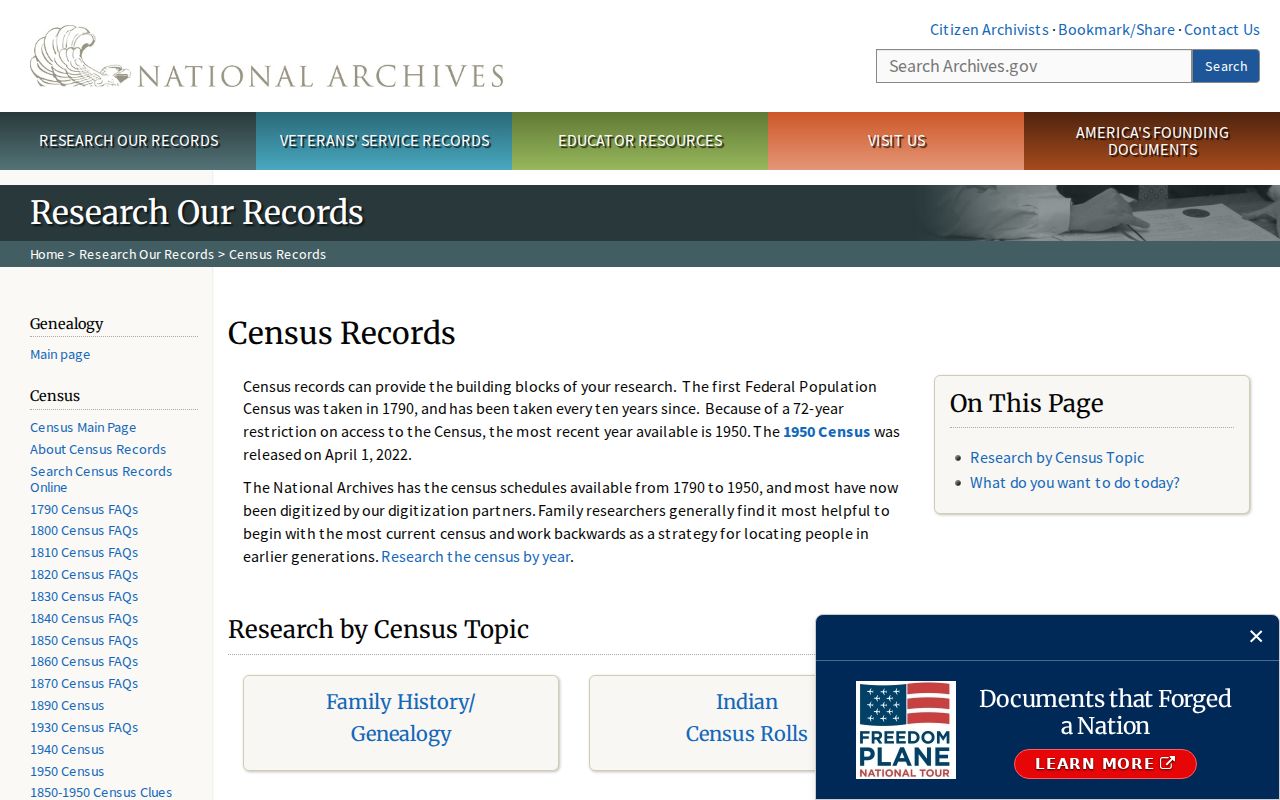
The census image belongs beside, not above, the deed chain: it contributes household evidence tied to a date and enumeration geography.
Permits Date Huntington Beach Address Change
The Huntington Beach Permit Center is a useful bridge between an address and a physical change. Its Accela search covers building records and links to Planning, Engineering, Fire, Urban Runoff, Code Enforcement, and Business Licenses. Search by street components, house number, APN, permit number, project name, date range, record type, status, license type, or state license number. The portal uses a separate path for records before 1996.
A permit result can supply a record number, type, project or work description, address, status, dates, inspections, and named applicants or licensed professionals when not withheld. It dates an application or project. It does not create an occupancy register, and a named applicant should not be relabeled as an owner or resident.
The Huntington Beach building-record search is the source for the permit image below.
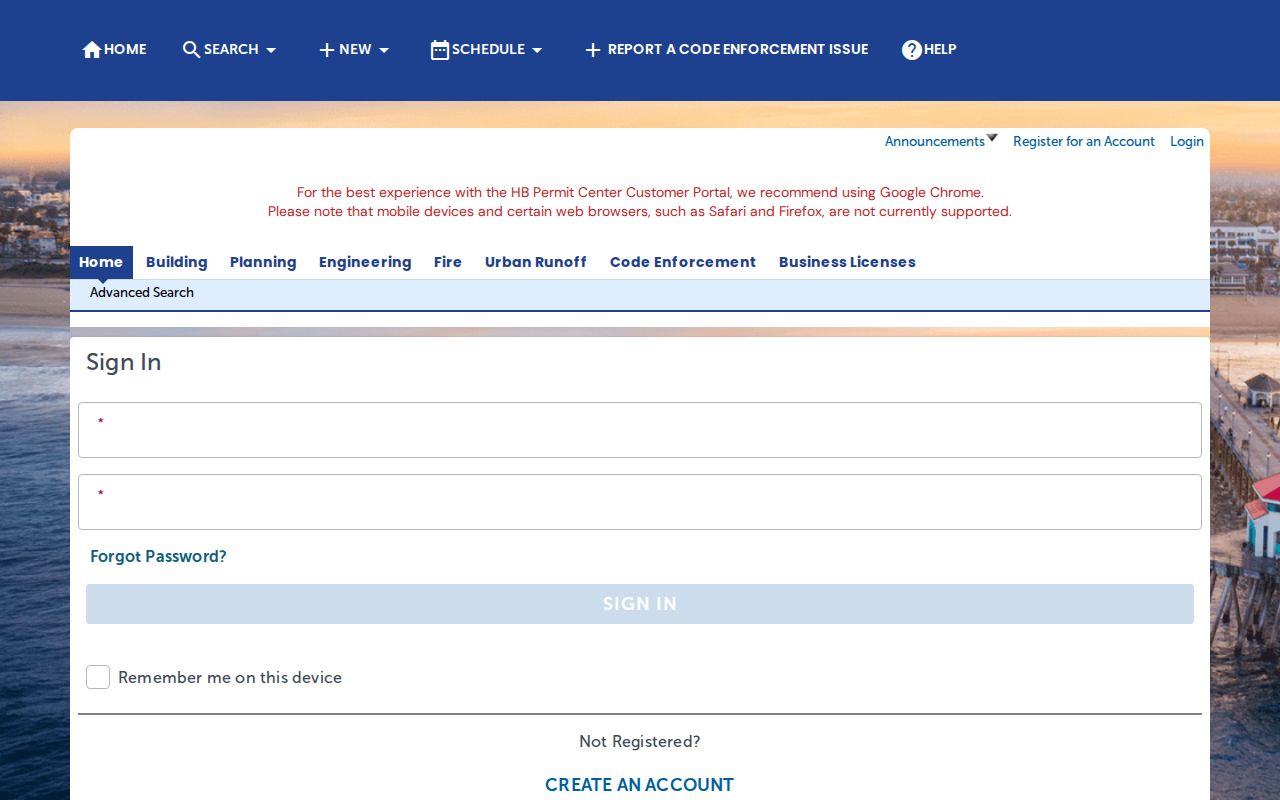
A dated permit can explain a new unit, addition, demolition, or remodel between two directory snapshots, while the deed and tax records keep the ownership question separate.
Sanborn Maps for Huntington Beach House History
The Library of Congress holds a fully digitized four-sheet Sanborn fire-insurance map set for Huntington Beach dated January 1909. The sheets show building footprints, construction and use context, and block relationships. They are especially useful for a pre-oil-boom or early beach-town address when the modern parcel outline does not resemble the older town.
The 1930 census labeled part of the numbered-street core “Standard Oil Company Camp.” An address in that sector may reflect company-controlled quarters or a boarding arrangement rather than an individually titled parcel, which is why an owner, directory subscriber, and census household can diverge.
The map does not name residents. Compare its footprint and street labels with the APN, deed legal description, permit dates, and directory address. If a later source appears to place a household on a different number, the discrepancy may be a changed parcel, annexation, or address form rather than a failed identity match.
The Sanborn collection is best treated as a local geography check. It can show where a structure stood and how it was used, while a directory, census page, obituary, or probate file supplies the personal connection.
Huntington Beach Obituaries and Probate
When a directory trail ends, local obituary and cemetery sources can provide a date, spouse, relative, occupation, or former address. Orange County Public Libraries points researchers to the California Death Index for 1940-1997, NewsBank and Obits Archive after January 1, 1987, and older Orange County Register microfilm. Staff assistance is available through a branch or the library's history and genealogy service.
OCCGS's digitized cemetery project is narrower than a general obituary index. Its local index excludes deaths after February 1978 and omits some inscription detail, so the six printed or digitized volumes should be checked for relationship wording and neighboring stones. An index hit is a lead, not a complete biography.
Probate dockets can identify a decedent, fiduciary, heir, or counsel, while a recorded transfer can show how an estate moved an interest. Pair the public petition or order with the deed and legal description. A surname match alone is not proof of kinship or of residence at the address.
Huntington Beach Previous Residents Evidence
A sound conclusion is a dated chain of modest claims. For example, a 1982 deed can establish that two indexed parties appeared in an instrument, a 1987 directory can show a printed subscriber, a 1990 permit can show an applicant, and a tax bill can identify the owner of record on its lien date. Those statements should stay distinct.
- Label the fact: owner of record, grantor, grantee, listed occupant, census household member, applicant, or building description.
- Write the source date and coverage limit beside the fact, including the online recorder cutoff or directory gap.
- Carry APN, tract or lot, legal description, address variant, and instrument number through every comparison.
- Use an independent record before turning a likely match into a family or house-history conclusion.
- State uncertainty plainly when a no-listing year, old number, or restricted file leaves more than one explanation.
Lawful house history. Previous-resident research in Huntington Beach is appropriate for family history, preservation, genealogy, and personal curiosity. Do not use an old address record to stalk, harass, intimidate, or track a living person.
The best past-resident result is not the longest name list. It is a small, well-dated set of records that explains how a parcel, its structures, and its listed households changed over time.